What is considered good credit?
- 1. Introduction
- 2. What Is a Credit Score?
- 3. What Is Considered a Good Credit Score?
- 4. Credit Score Range & Meaning
- 5. Why Your Credit Score Matters
- 6. What Happens When You Have a Failed CIBIL Score
- 7. How to Improve Your Credit Score Fast
- 8. Common Mistakes That Damage CIBIL Score
- 9. Final Thoughts
- 10. FAQ
In 2026, the definition of "good credit" has shifted as Indian lenders move toward high-speed, AI-driven risk assessment. While a three-digit number between 300 and 900 defines your status, the real value lies in the financial doors it opens—or closes. Discover What is Considered Good Credit in today's competitive market and how Failed Cibli Consulting Private Limited—Chennai’s premier credit repair authority—can help you achieve an elite financial profile:
- 🏆 The Elite 750+ Standard: In the current lending climate, a CIBIL score of 750 or above is the gold standard for "Excellent" credit. This bracket unlocks 2026's lowest interest rates and pre-approved offers. Failed Cibli specializes in helping clients bridge the gap to this elite level through strategic 360° Credit Audits.
- ✅ The 700–749 "Good" Range: A score in this range is considered healthy and qualifies you for most personal, home, and car loans. However, our experts at Failed Cibli Consulting often find that minor clerical errors or reporting lags are keeping these borrowers from the better terms available to 750+ scorers.
- ⚠️ The 650–699 "Fair" Zone: This range is viewed with caution by modern lenders. While you may get approved, you will likely face higher interest rates or stricter documentation requirements. We provide Multi-Bureau Synchronization to ensure your positive history is accurately reflected across CIBIL, Experian, and Equifax to stabilize your standing.
- 🛡️ Fixing "Failed" Credit (Below 650): If your credit range stands now below 650, you are in the high-risk category. Failed Cibli Consulting Private Limited has a decade of experience in repairing "broken" credit, offering a guaranteed score boost of 40 to 110 points by resolving "Settled," "NPA," or "Written-Off" markers.
- 🤝 Expert Guidance from Chennai's Leaders: Headquartered in Chitlapakkam, Chennai, we have served over 1,00,000+ happy clients. We don't just explain what is considered good credit; we provide the legal and technical roadmap to ensure your next loan application is a 5-star success.
If you’re reading this, chances are you got hit with that classic bank message:
“Sorry, your CIBIL score is not sufficient.”
Yeah… it stings. But don’t worry — you’re not alone. Most people in India don’t even think about their credit score until they get rejected for a loan, credit card, or EMI. And once you’re in Failed CIBIL territory, everything feels like a dead-end.
So, let’s break down something super important:
What is considered a good credit score? And how do you climb out of a bad one?
This blog keeps it real — no boring finance textbook vibes.
1. What Is a Credit Score?
Your credit score is basically your financial reputation. It tells lenders how trustworthy you are when it comes to paying back money. In India, the score usually comes from CIBIL, ranging from 300 to 900.
Think of it like your “credit behavior scoreboard”:
Pay EMIs on time? → Score goes up
Miss payments? → Score goes down
Too many loans? → Score tanks
Clean financial discipline? → Score shines
2. What Is Considered a Good Credit Score in India?
Alright, here’s your answer straight-up:
⭐ A good credit score in India = 750 and above
This is the sweet spot where banks trust you, approvals are fast, and interest rates are low.
Let’s break it down:
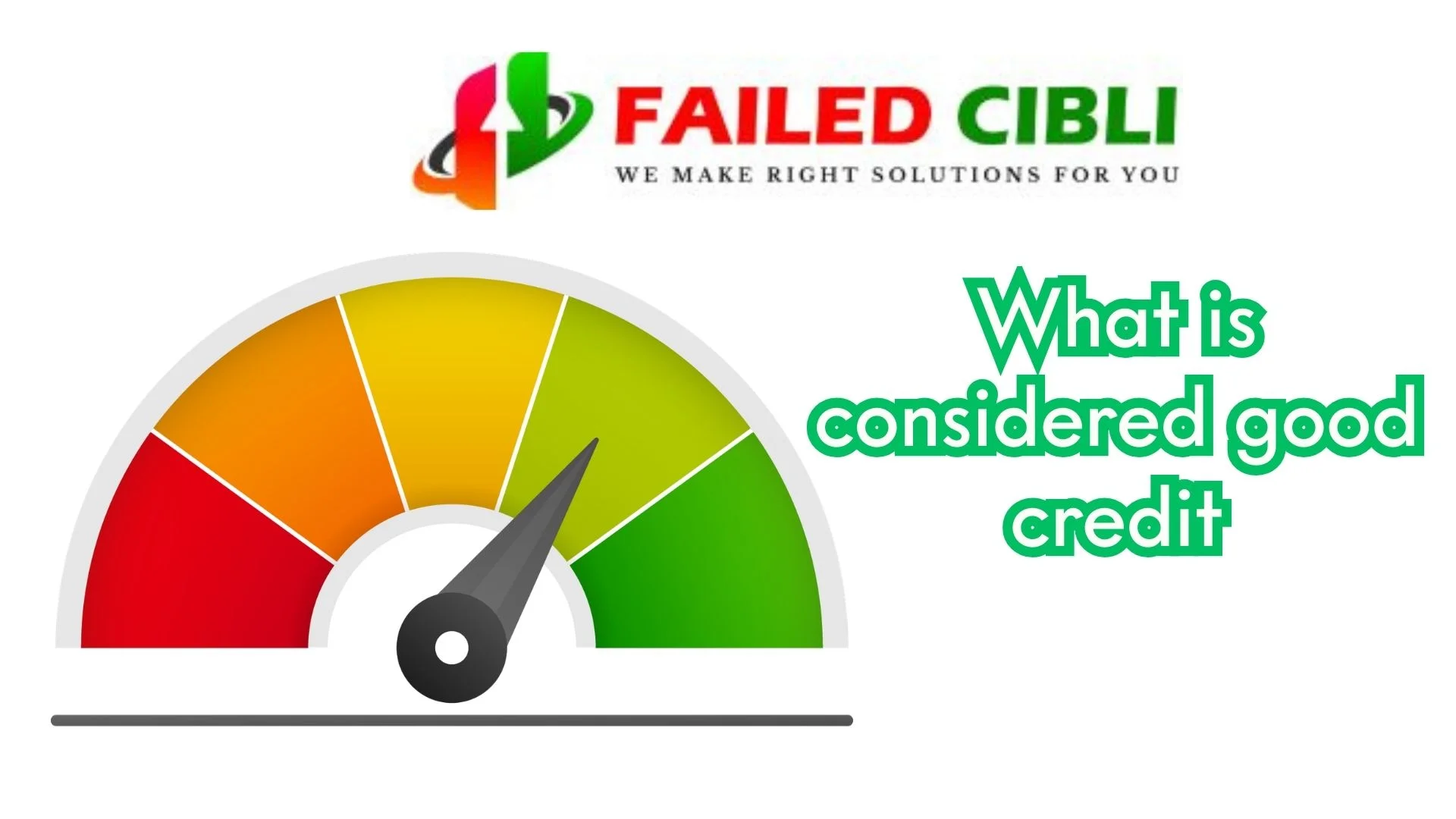
800 – 900: Excellent
This is the “VIP Zone.” Banks will literally love you.750 – 799: Very Good
High chances of approval. Sweet interest rates.700 – 749: Decent
You may get loans, but not the best deals.650 – 699: Below Average
Lenders get nervous. High interest rates.600 – 649: Poor
Expect rejection from most major banks.Below 600: Failed CIBIL Zone
This is the “red alert” zone. You need to fix things ASAP.
If you’re asking “What is considered good?” → 750+
If you’re asking “Why am I getting rejected?” → Probably below 650
3. CIBIL Score Range & What It Actually Means
300 – 549: Very Bad
Missed EMIs, defaults, settlements — the whole mess. You’re flagged.
550 – 649: Bad
You’ll struggle for any decent loan.
650 – 699: Fair
Still risky. Only some lenders will consider you.
700 – 749: Good
You’re okay. Lenders need little convincing.
750 – 799: Very Good
You’re reliable. Approvals get easy.
800 – 900: Excellent
Top tier! You get premium loan options & lowest interest.
4. Why Your Credit Score Matters (More Than You Think)
A lot of people think credit score is just a number.
But that number literally affects your whole financial life:
Loans get approved faster
You get cheaper interest rates
You can negotiate better deals
You can get premium credit cards
You avoid unnecessary documentation
You don’t get asked awkward questions
A good score = your life becomes smoother.
A bad score = everything becomes a struggle.
For Failed CIBIL users, banks immediately categorize you as high-risk. That’s why approvals get harder.
5. What Happens When You Have a Failed CIBIL Score?
Let’s be brutally honest:
Loan rejection becomes normal
Credit card requests get declined
You pay insane interest rates
You need guarantors for even small loans
NBFCs become your only option
Your financial stress goes up
Future opportunities get blocked
A Failed CIBIL score is like getting a “red flag” tattoo on your financial record.
But you CAN fix it. Just takes discipline.
6. How to Improve Your Credit Score Fast
Here’s the no-bs guide to fixing a bad or failed CIBIL score.
✅ 1. Pay All EMIs on Time
Not “sometimes.” Not “when you remember.”
Every single month.
✅ 2. Clear Credit Card Bills Fully
Minimum due = financial trap.
Full payment = score boost.
✅ 3. Keep Credit Utilization Low
Stay under 30% of your credit limit.
If your limit is ₹1,00,000 → don’t use more than ₹30,000.
✅ 4. Avoid Too Many Loan Applications
Each application hits your score.
✅ 5. Check Your CIBIL Report for Errors
Wrong loan entries?
Old accounts not closed?
Correct the mistakes.
✅ 6. Don’t Close Old Credit Cards
Old accounts = long credit history = higher score.
✅ 7. Get a Secured Credit Card
FD-backed credit cards help rebuild your score FAST.
✅ 8. Maintain a Credit Mix
Personal loan + credit card + secured loan = healthy profile.
⭐ Bonus Tip:
Try not to settle loans. Settlements hurt your CIBIL for years.
7. Common Mistakes That Damage Your Score
Most Failed CIBIL users repeatedly make these mistakes:
Missing EMIs
Overusing credit cards
Applying for multiple loans
Not updating KYC
Ignoring old loan issues
Doing loan settlements
Using more than 50–60% credit limit
Not maintaining any credit history
Avoiding these alone can boost your score faster.
8. Final Thoughts
A good credit score = 750+
A failed CIBIL score = below 600
Your score decides how smooth or stressful your financial journey becomes.
The good news? Anyone can bounce back with consistent habits.
Start now.
Pay on time.
Clear dues.
Stop overusing credit.
Your credit score can go from “Rejected Everywhere” to “Approved Instantly” in just a few months.
FAQ – What Is Considered a Good Credit Score?
Q1: What score is considered good in India?
A score of 750 and above is considered good for easy loan approvals.
Q2: What score leads to Failed CIBIL?
Anything below 600 is typically treated as a failed CIBIL score.
Q3: Can I get a loan with 650 score?
Maybe, but with higher interest and tougher checks.
Q4: How long does it take to improve CIBIL?
Usually 3–6 months of consistent discipline.
Q5: Does checking CIBIL reduce my score?
No. Soft checks do not affect your score.
Q6: What lowers my credit score the fastest?
Missed EMIs, loan settlements, and maxing out credit cards.