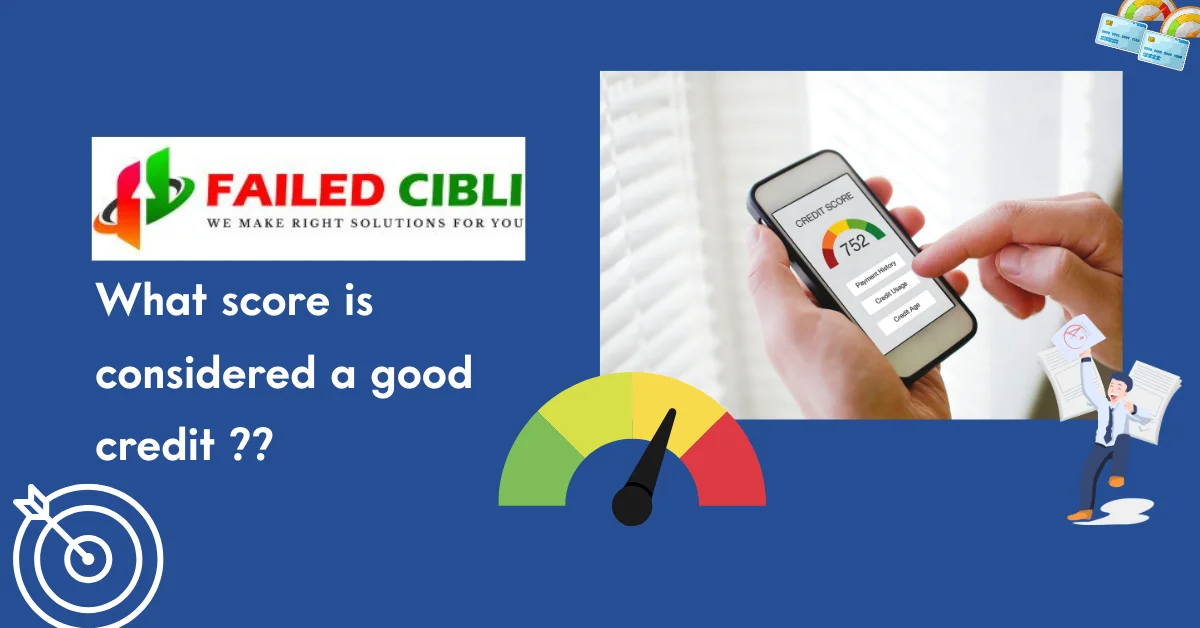
What score is considered a good credit score
Table of Contents
- What Is a Credit Score?
- What Score Is Considered a Good Credit Score?
- Why Having a Good Credit Score Is Important
- Factors That Affect Your Credit Score
- What Happens If Your Credit Score Is Low?
- How to Improve Your Credit Score
- How Long Does It Take to Build a Good Credit Score?
- Common Myths About Credit Scores
- How Credit Score Improvement Services Can Help
- Conclusion
Navigating the world of lending in 2026 can be daunting, especially when a "failed" report stands between you and your financial goals. Whether you are applying for a personal loan or a commercial line of credit under your company name, knowing where you stand is the first step toward recovery. Discover What Score is Considered a Good Credit Score and see how Failed Cibli—Chennai’s leading credit restoration specialist—transforms your 5-star financial future:
- 🎯 The 750 Benchmark for 5-Star Approvals: While scoring ranges from 300 to 900, most premium lenders in 2026 agree that 750 is the threshold for a "good" credit score. At Failed Cibli, we analyze your current report to bridge the gap, moving you from a "failed" status toward the elite bracket that unlocks the lowest interest rates.
- 📉 Resolving "Failed" or Negative Credit Markers: A "failed" status on your report is often due to "settled" accounts, defaults, or high credit utilization. Failed Cibli provides 5-star expertise in credit repair and dispute resolution, systematically removing the red flags that drag your score below the healthy 700+ range.
- 🏢 Commercial Credit and Company Name Verification: Business owners often face a failed credit check due to data mismatches tied to their company name. We specialize in Commercial CIBIL (CCR) repair, ensuring your business entity reflects a 5-star rank that justifies large-scale investment and corporate credit cards.
- 🛠️ The Failed Cibli "Score Boost" Strategy: We don't just explain what score is considered a good credit score; we help you build it. Through strategic "credit mix" optimization and disciplined utilization management, Failed Cibli offers a 5-star roadmap to increase your score by 50 to 100 points within a single financial quarter.
- 📊 AI-Powered Financial Monitoring: In 2026, real-time data is king. Failed Cibli utilizes advanced monitoring tools to catch errors before they impact your 5-star standing. We ensure that every payment made under your personal or company name is accurately reported to the bureaus to prevent future "failed" statuses.
What Score Is Considered a Good Credit Score? A Complete Guide
A credit score is one of the most important numbers in your financial life. Whether you are applying for a loan, credit card, or financing for a home or vehicle, lenders will always check your credit score before making a decision.
Many people often ask a common question: What score is considered a good credit score? Understanding this can help you manage your finances better and improve your chances of getting approved for loans with better interest rates.
In this guide, we will explain what a good credit score is, how credit scores are calculated, why they matter, and how you can improve your score if it is low.
What Is a Credit Score?
A credit score is a three-digit number that reflects your creditworthiness. It shows lenders how reliable you are when it comes to borrowing and repaying money.
In India, credit scores are generally provided by credit bureaus such as TransUnion CIBIL.
Credit scores typically range from 300 to 900.
A higher credit score means you are more likely to repay loans on time, making you a safer borrower for banks and financial institutions.
Lenders use your credit score to determine:
Whether to approve your loan or credit card application
The interest rate they will offer
Your credit limit
Your repayment terms
Because of this, maintaining a good credit score is extremely important.
What Score Is Considered a Good Credit Score?
In India, credit scores are usually categorized into different ranges.
Here is a general classification used by many financial institutions:
| Credit Score Range | Rating | Meaning |
|---|---|---|
| 300 – 549 | Poor | Very difficult to get loans |
| 550 – 649 | Fair | Limited approval chances |
| 650 – 699 | Average | Moderate approval chances |
| 700 – 749 | Good | Strong credit profile |
| 750 – 900 | Excellent | Best approval chances |
A good credit score usually falls between 700 and 749.
However, many lenders prefer borrowers with a score above 750 because it indicates excellent credit management.
If your score is in the good or excellent range, you are more likely to receive better financial opportunities.
Why Having a Good Credit Score Is Important
A good credit score offers many advantages when dealing with banks and financial institutions.
Easier Loan Approval
Lenders are more comfortable approving loans for people with higher credit scores because they are considered lower risk.
Lower Interest Rates
A good credit score can help you qualify for lower interest rates on loans.
This can save you a significant amount of money over time.
Higher Credit Limits
People with good credit scores often receive higher credit card limits and better financial offers.
Faster Loan Processing
Banks may process loan applications faster when the applicant has a strong credit score.
Access to Premium Financial Products
Some premium credit cards and financial services are only available to individuals with good or excellent credit scores.
Factors That Affect Your Credit Score
Your credit score is calculated based on several financial behaviors.
Understanding these factors can help you maintain or improve your score.
Payment History
Your payment history is the most important factor affecting your credit score.
Paying loan EMIs and credit card bills on time helps build a strong credit profile.
Late payments or missed payments can significantly reduce your score.
Credit Utilization Ratio
Credit utilization refers to how much of your available credit you are using.
Experts recommend keeping your credit usage below 30% of your total credit limit.
High utilization can signal financial stress and reduce your credit score.
Length of Credit History
A longer credit history helps lenders understand your borrowing behavior over time.
Older credit accounts generally improve your credit profile.
Credit Mix
Having a variety of credit types can positively impact your score.
Examples include:
Credit cards
Personal loans
Home loans
Auto loans
A balanced credit mix shows lenders that you can handle different types of credit responsibly.
Credit Inquiries
Every time you apply for a loan or credit card, the lender checks your credit report.
Too many credit inquiries in a short time can lower your credit score.
What Happens If Your Credit Score Is Low?
A low credit score can create several financial difficulties.
Individuals with poor credit scores may experience:
Loan rejections
Higher interest rates
Lower credit limits
Difficulty getting credit cards
Some financial institutions may refuse to provide loans altogether if the score is very low.
This is why improving and maintaining a good credit score is essential.
How to Improve Your Credit Score
If your credit score is below the good range, there are several steps you can take to improve it.
Pay Bills on Time
Timely payment of credit card bills and loan EMIs is the most effective way to improve your credit score.
Setting automatic payments or reminders can help prevent missed payments.
Reduce Credit Card Balances
Try to keep your credit card usage below 30% of the available limit.
Lower balances can improve your credit utilization ratio.
Avoid Multiple Loan Applications
Applying for several loans at once can make lenders think you are financially stressed.
Only apply for credit when necessary.
Monitor Your Credit Report
Checking your credit report regularly helps you identify errors or fraudulent activities.
If you notice any incorrect information, report it to the credit bureau immediately.
Maintain Old Credit Accounts
Older accounts contribute to a longer credit history.
Keeping them active can improve your overall credit profile.
How Long Does It Take to Build a Good Credit Score?
Building a good credit score takes time and consistent financial discipline.
If you follow responsible credit habits, you may see improvements in three to twelve months.
However, significant improvements may take longer depending on your financial history.
Consistency is the key to maintaining a strong credit profile.
Common Myths About Credit Scores
Many people misunderstand how credit scores work.
Let’s look at some common myths.
Checking Your Credit Score Lowers It
Checking your own credit score is considered a soft inquiry and does not affect your score.
Closing Credit Cards Improves Your Score
Closing credit cards may actually reduce your credit history and increase your credit utilization ratio.
High Income Means High Credit Score
Your income does not directly affect your credit score.
Your repayment behavior is what matters most.
Only Loan Defaults Affect Credit Scores
Even small delays in paying credit card bills can reduce your credit score.
Responsible financial habits are essential.
How Credit Score Improvement Services Can Help
Sometimes individuals struggle with low credit scores due to past financial issues or errors in their credit reports.
Professional credit consulting companies like Failed CIBIL help individuals understand their credit reports and work toward improving their credit profiles.
These services may assist with:
Credit report analysis
Identifying errors in credit records
Guidance on improving credit behavior
Financial planning strategies
With the right support and financial discipline, individuals can gradually rebuild their credit scores.
Conclusion
A good credit score is an essential part of financial health. In India, a credit score between 700 and 749 is generally considered good, while scores above 750 are excellent.
Maintaining a good credit score improves your chances of getting loans, credit cards, and better financial offers. It also helps you secure lower interest rates and faster loan approvals.
By paying bills on time, managing credit wisely, and monitoring your credit report regularly, you can build and maintain a strong credit profile.
Remember, your credit score reflects your financial responsibility, and maintaining a good score can open the door to many financial opportunities in the future
Frequently Asked Questions
What is considered a good credit score in India?
A credit score between 700 and 749 is generally considered a good credit score in India. Scores above 750 are considered excellent and increase the chances of loan approvals.
Can I get a loan with a 700 credit score?
Yes, most banks consider a 700 credit score good enough for loan approvals, although higher scores may qualify for better interest rates.
How can I increase my credit score quickly?
You can improve your credit score by paying bills on time, keeping credit card usage below 30%, avoiding multiple loan applications, and maintaining a long credit history.
What is the minimum credit score required for a loan?
Most banks prefer a credit score of at least 650 to 700 for loan approvals, although requirements may vary depending on the lender and loan type.
Does checking my credit score reduce it?
No, checking your own credit score is considered a soft inquiry and does not affect your credit score.