Easy Credit Score Scale Chart for Beginners
- 1. Introduction
- 2. What Exactly Is a Credit Score?
- 3. Easy Credit Score Scale Chart for Beginners
- 4. What Each Credit Score Range Actually Means
- 5. Why This Score Scale Even Matters
- 6. How to Read This Chart the Right Way
- 7. Common Beginner Mistakes That Hurt the Score
- 8. How to Improve Your Score Fast
- 9. Final Thoughts
- 10. FAQ
Navigating the world of credit can be overwhelming for beginners, but understanding the 300–900 scoring system is the key to unlocking your financial future. In 2026, lenders use precise ranges to decide your loan eligibility and interest rates in seconds. Discover the Easy Credit Score Scale Chart for Beginners and see how Failed Cibli Consulting Private Limited—Chennai’s leading credit experts—can move you from a "failed" status to an elite rating:
- 🏆 Excellent (750 – 900): This is the gold standard for 2026. If you are in this range, you qualify for the lowest interest rates and premium credit cards. Failed Cibli helps high-scorers protect this elite status by auditing reports for "Ghost Inquiries" that can silently pull your numbers down.
- ✅ Good (700 – 749): A very healthy range where most loan applications are approved with decent terms. However, our experts at Failed Cibli Consulting often find that minor reporting errors are the only thing keeping these borrowers from the absolute best market rates available to 750+ scorers.
- ⚠️ Average/Fair (650 – 699): You are in a "borderline" zone. While loans are possible, you may face higher interest rates or smaller loan amounts. We provide 360° Credit Makeovers to resolve the underlying issues, moving you into the "Good" category within just 15 to 45 days.
- 🚨 Poor (300 – 649): This range indicates a history of missed payments or high debt, leading to instant rejections from major banks. Failed Cibli Consulting Private Limited specializes in these "failed" cases, offering a guaranteed score boost of 40 to 110 points by legally correcting "Settled" or "NPA" markers.
- 🤝 Expert Interpretation in Chennai: Located in Chitlapakkam, our team has over 10 years of experience and has served 1,00,000+ happy clients. We don't just show you a chart; we provide a personalized roadmap to synchronize your records across CIBIL, Experian, and Equifax for total financial recovery.
Easy Credit Score Scale Chart for Beginners (The No-Stress Guide!)
1. Introduction
If you’re new to the whole “credit score” scene, don’t stress — you’re not the only one. Most people only check their credit score when something goes wrong… like a loan rejection or a failed EMI attempt. And that moment hits HARD.
But once you understand how the score works, everything becomes way easier.
So, let’s break it down using a beginner-friendly, zero-complication score scale chart.
No confusing finance jargon. Just straight facts.
2. What Exactly Is a Credit Score?
A credit score is basically your given by lenders.
It’s a three-digit number, usually ranging from 300 to 900, that shows how good you are at handling money, loans, payments, and credit cards.
In simple terms:
Pay on time → score goes up
Miss payments → score goes down
Use too much credit → score tanks
Manage everything smoothly → score shines
This number decides if banks trust you or not.
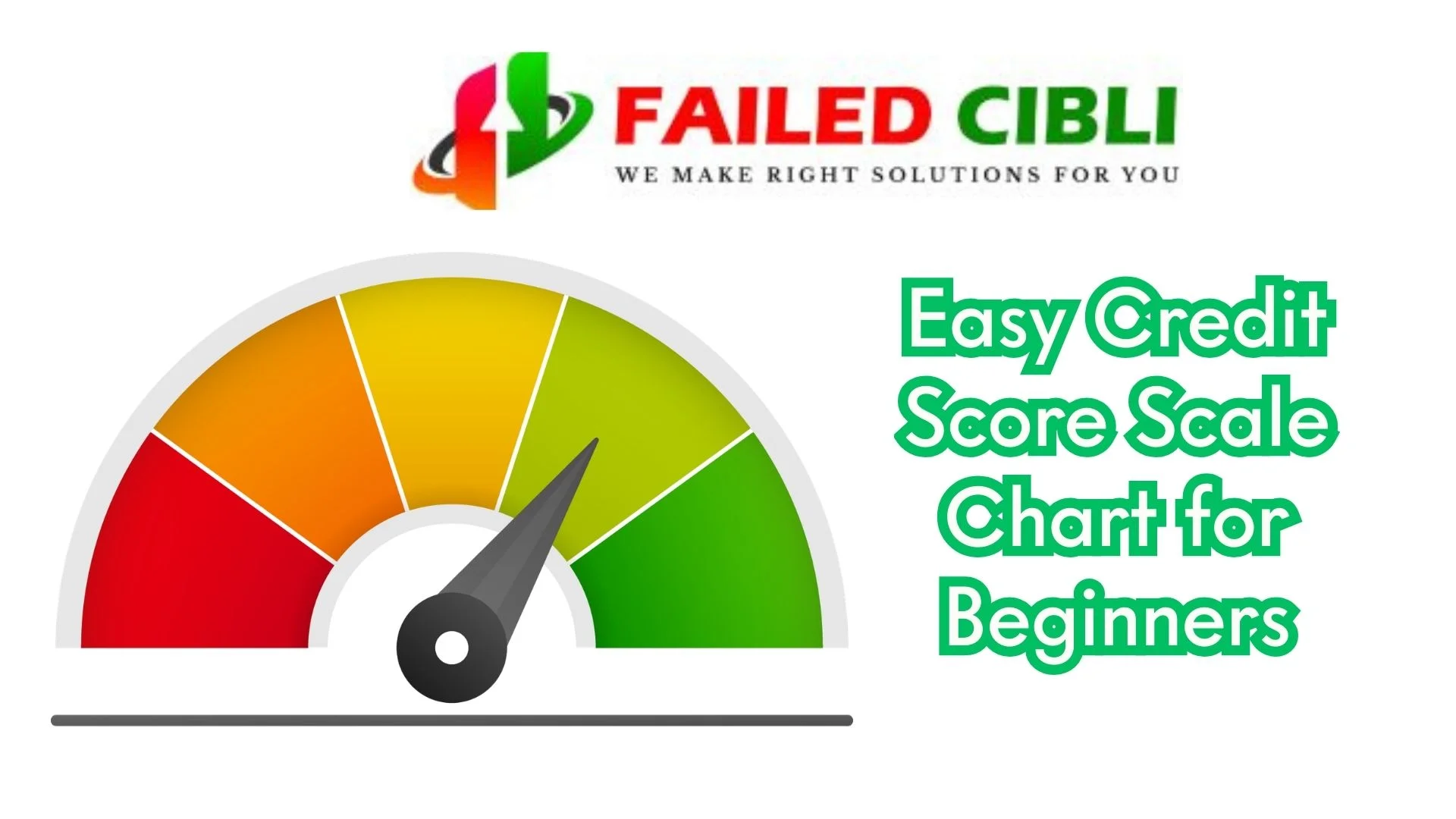
3. Easy Credit Score Scale Chart for Beginners
Here’s the most beginner-friendly chart you’ll ever see:
| Score Range | Rating | Meaning |
|---|---|---|
| 800 – 900 | Excellent | You’re in the top league. Banks trust you instantly. |
| 750 – 799 | Very Good | Strong profile. Fast approvals, lower interest. |
| 700 – 749 | Good | Decent score. Most loans get approved. |
| 650 – 699 | Average | Risk zone. Approval becomes harder. |
| 600 – 649 | Poor | Most lenders say NO. |
| 300 – 599 | Very Poor (Failed Zone) | High-risk. You NEED to fix your credit ASAP. |
That’s it.
This is the ultimate beginner cheat sheet.
4. What Each Credit Score Range Actually Means
Let’s break the chart into real-life interpretations:
⭐ 800 – 900: The Prime League
This is the “I pay everything on time and banks love me” zone.
You get:
Best interest rates
Quick loan approvals
Premium credit cards
It’s the gold level.
⭐ 750 – 799: The Sweet Spot
This is what most people aim for.
You get almost all loans approved without stress.
If your score is here, you’re doing it right.
⭐ 700 – 749: Good but Not Great
Not bad… but lenders still look twice.
You’ll get approvals, but not the best deals.
⭐ 650 – 699: The Danger Zone
This is where lenders start asking questions like:
“Why is your score low?”
“Have you missed payments?”
It’s not a good place to be.
⭐ 600 – 649: High-Risk Zone
You’ll face:
Loan rejections
High interest
Tough documentation
Beginners often fall here due to poor habits.
⭐ 300 – 599: Failed / Red Alert Zone
This is the bottom of the chart.
It usually means:
Loan default
Missed EMIs
Credit card overdue
Settlement
High debt
Multiple rejections
If you’re here, rebuilding becomes super important.
5. Why This Score Scale Even Matters?
Because your credit score controls almost everything related to money:
Loans
Credit cards
EMI purchases
Rental agreements
Job background checks (in some sectors)
Interest rates
Insurance in certain cases
A higher score = cheaper money + faster approvals
A lower score = headache + rejection
Your credit score literally shapes your financial freedom.
6. How Beginners Should Read This Score Chart
Here’s the simple way:
If your score is below 650 → You’re in rebuild mode
If your score is 650–699 → You’re unstable, fix habits
If your score is 700–749 → You’re good, maintain discipline
If your score is 750+ → You’re stable and trusted
If your score is 800+ → You’re elite
Don’t overthink.
Just know your zone and work from there.
7. Common Beginner Mistakes That Damage the Score
Most beginners tank their score due to:
Paying EMIs late
Paying minimum due on credit cards
Maxing out card limits
Applying for too many loans
Closing old credit accounts
Using credit cards for everything
Ignoring credit report errors
Defaulting on small loans
Doing loan settlements
If you’re doing any of these… yeah, stop.
8. How to Improve Your Score Fast (Beginner-Friendly Plan)
Here’s the easiest improvement plan:
✅ Step 1: Pay Every EMI on Time
Even 1 late EMI can drop your score.
✅ Step 2: Keep Credit Card Usage Under 30%
If you have ₹1,00,000 limit → don’t spend more than ₹30,000.
✅ Step 3: Clear Your Full Credit Card Bill
Minimum payment = score damage.
✅ Step 4: Don’t Apply for Multiple Loans at Once
Each application = one hit on your score.
✅ Step 5: Fix Errors in Your Report
Sometimes the issue isn’t you — it’s wrong reporting.
✅ Step 6: Use a Secured Credit Card
FD-backed cards are perfect for beginners.
✅ Step 7: Don’t Close Old Credit Accounts
Old accounts = stronger score.
Stick to this for 3–6 months → score starts rising fast.
9. Final Thoughts
Credit score isn’t complicated — it’s just made to look that way.
The truth is:
Money discipline = strong score
Carelessness = scores drop
If you follow the chart and keep your habits tight, your credit score will naturally climb higher month after month.
Start now.
Track your score.
Fix mistakes.
Stay consistent.
Your financial future literally depends on it.
FAQ – Easy Credit Score Scale
Q1: What is a good credit score for beginners?
Anything above 750 is considered very good.
Q2: Can beginners have a high score?
Yes. With proper habits, beginners can reach 750+ in a few months.
Q3: Is 700 a good score?
It’s good, but not excellent. You can still improve it.
Q4: What is a bad credit score?
Anything below 650 is considered poor.
Q5: How fast can a beginner improve their score?
Usually 2–6 months with disciplined payments and low credit usage.